Facebook
Twitter
  • Home
  • About
  • Buy Book Online
  • School Forms
  • Photos
  • Letters to Gabe
  • Guestbook
  • The Foundation
  • Blog
  • Booking Info
You Are Here: Home > More Info > Articles

Not Just Kids Being Kids


May 31, 2006
Portage Daily Register :: Local ::

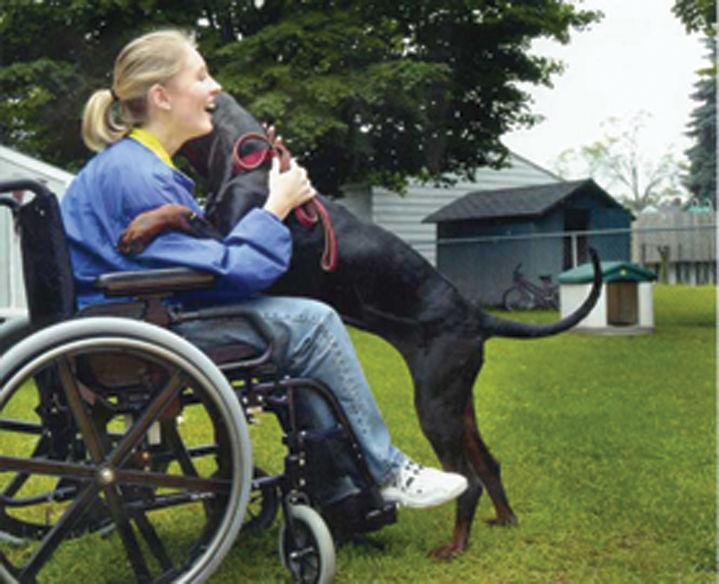
Gabe & Izzy It's not your dad's playground anymore, and she's not your mom's bully. Aside from the age-old bullying techniques of physical and verbal intimidation, bullies today have access to the Internet and can post cruel remarks in chat rooms or send belittling text messages to their target's cell phones.

But according to staff members at area school districts, the mind-set about bullies is changing, and rather than encouraging targets to simply ignore bullies, teachers are finding ways to educate targets — and bullies — about destructive behaviors.

"We no longer live in a society that tolerates physical aggression," said Vicki Sukowski, K-12 guidance counselor in the Poynette School District. "Our role in the schools is to teach children that bullying behavior is not acceptable. We'll give you other ways, but you are not going to hurt somebody else to get what you need."

According to Julee Dredske of CESA 5, experts estimate that 15 percent of students nationwide are bullies. Bullying begins in the elementary grades and peaks in middle school grades, according to Dredske, and up to 71 percent of bullying instances go unreported.

Bullying comes in three forms — proactive, relational and, the scariest form according to Dredske, reactive.

Proactive bullying includes physical and verbal abuse, actively seeking to intimidate targets for fun or for their own purposes.

"Bullies have learned methods of getting what they want," Sukowksi said. "And each time they get it, it reinforces that behavior."

While boys are the most frequent physical aggressors, girls bully equally as often, using different methods. Relational bullying, using methods of ignoring or manipulating victims, is more common among girls.

"Girls can be so nasty with their shunning and exclusion. It's just devastating," said Laura Kallenbach, guidance counselor at Portage High School. "Boys are more overt and physically aggressive."

Reactive bullies are people who have been targets of bullying for so long that they become bullies themselves in order to get revenge on a bully or on a school.

Not Just 'Kids Being Kids'

While there is no one way to stop bullying in its tracks, area districts are paying attention to the situation and working to eliminate the problem. In Portage, as in the rest of the nation, bullying is a more common problem at the middle school level than at the high school level, according to principals Wayne Bartels and Karin Exo. Bartels sees about 20 to 30 incidents of bullying in a typical school year at the junior high, while Exo sees only a "handful" of reported incidents at the high school, mostly among the freshman class.

Regardless of the age group, the schools have a zero-tolerance policy toward this sort of behavior.

When an incident is reported by a teacher, student or parent, the first step is to take statements from both parties. The bully is sternly told to stop the intimidating behavior, and nine time out of ten that is enough, according to Exo's experience. If not, detentions, and suspensions could be called for. If all else fails, the police are involved.

"One thing we no longer do is just move a victim into another classroom," Exo said. "If anyone has to be moved, we've learned it should be the bully so that he or she learns there are consequences for poor behavior."

Aside from discipline, there is an educational factor involved for the bullies as well as their targets and those watching quietly. For both targets and bystanders, area schools push students to recognize the difference between tattling and telling an adult that someone is in trouble. Targets are encouraged to come up with an active plan to first ignore the assaults, then physically remove themselves from the bully and join other groups of children. If these methods don't work, then it's time to get an adult involved, according to Sukowksi.

Education is important for bullies as well as targets. Poynette schools offer an information packet to any student who has been accused of bullying.

"We give them information about harassment so they can understand what the consequences are legally and emotionally," Sukowski said. "Once we've done this, they can't come back a second time and say, 'I was only kidding' or 'It was a mistake."

Creating an atmosphere to encourage reports of harassment is equally important, according to Bartels.

"It is important that teachers and adults have good relationships with kids," said Bartels, who explained that a committee at Portage Junior High School is working on a packet to educate teachers about bullying. "Kids need to be able to go to their favorite teacher or feel comfortable talking to an administrator when something's wrong."

Beyond the Schools

While the acts of bullying may start to dwindle as children get older, the effects of harassment can last for years for both the bully and the target, according Michael Hebel, a family therapist at Aspen Family Counseling in Portage.

For the targets of bullies, Hebel's goal is to teach them not to feed into the bully's trap by showing a reaction. Of utmost importance is the self-esteem of the victim.

"The most important thing is that they not internalize the negative comments and start believing them," Hebel said. "That's so harmful."

As far as bullies are concerned, Hebel explains that the act of bullying is a sign that something is wrong at home.

"When a child can't control something in their lives that's stressing them out, they over-compensate," Hebel said. "They're using bullying or intimidation to control something and compensate for that part of their life where they feel out of control."

In the long term, that bully is not doing him or herself any favors, as experts say they lack the skills to interact appropriately with others as adults.

"In the workforce, the No. 1 reason people get fired is not that they can't do the work. It's that they can't get along with their co-workers," Sukowksi said. "That behavior doesn't begin in their 20s and 30s. It begins in school."

One woman's story

Rhonda Hillman didn't think anything could be more painful than telling her 12-year-old daughter that the girl had a rare and progressive nerve disorder called Friedreich's ataxia. She was wrong. Finding out that her daughter, Gabrielle, had been hit by a school bully hard enough to leave bruises was much more painful.

Gabrielle Ford, now 26, tours schools across the nation to tell the story of how she was the victim of verbal and physical abuse from the hands and voices of her schoolmates in Fenton, Mich.

In a presentation called "Gabe and Izzy," Ford calmly and without reserve explains to students of all ages that her junior high and high school years were a mix of hiding the effects of the muscular distrophy-like disease from her classmates and hiding the truth about being bullied from her family.

"I kept it all to myself," Ford told students last week at Rio Elementary School. "I didn't want people to think I wasn't liked, that I couldn't take it or that I couldn't handle myself.

"I should have told somebody."

After she graduated from high school, Ford refused to use a wheelchair and became a recluse, hiding her disease from the public. Things changed when she convinced her mother to let her get a black and tan coonhound, whom she named Izzy. Ford had no idea that her new pet would eventually develop a liver disorder and then a muscular disorder that mirrored Ford's own symptoms and, according to Hillman, helped Ford come to terms with her own disease.

During her presentation, Ford encourages targets of bullying to speak out as well as those who witness bullying.

"If you see bullying and you don't say something, you are as guilty as the bully," Ford said. "Do what you want to do and don't be afraid to speak up. It's the right thing to do, to treat people with respect."

To learn more about Ford's tour and upcoming books, click on www.gabeandizzy.com.


Reprinted with permission


Home   |   About   |   Buy Book Online   |   School Forms   |   Photos   |   Letters to Gabe   |   Guestbook   |   The Foundation   |   Gabe's Blog   |   Booking Info   |   Site Map

Copyright © 2003-2012 Anti Bullying Speaker - Gabe & Izzy. All rights reserved.
Website design: Web Design Michigan

Gabrielle Ford's Bio
School Speaking Agenda
Calendar of Events
Meet Gabe & Izzy
Gabe & Izzy in New York
Speaking Engagements 1
Speaking Engagements 2
Speaking Engagements 3
Articles
Recommendations
Helpful Sites
Guestbook - 2011
2010 Archives
2009 Archives
2008 Archives
2007 Archives
2006 Archives
2005 Archives
2004 Archives
2003 Archives